_507f9d6c.png)
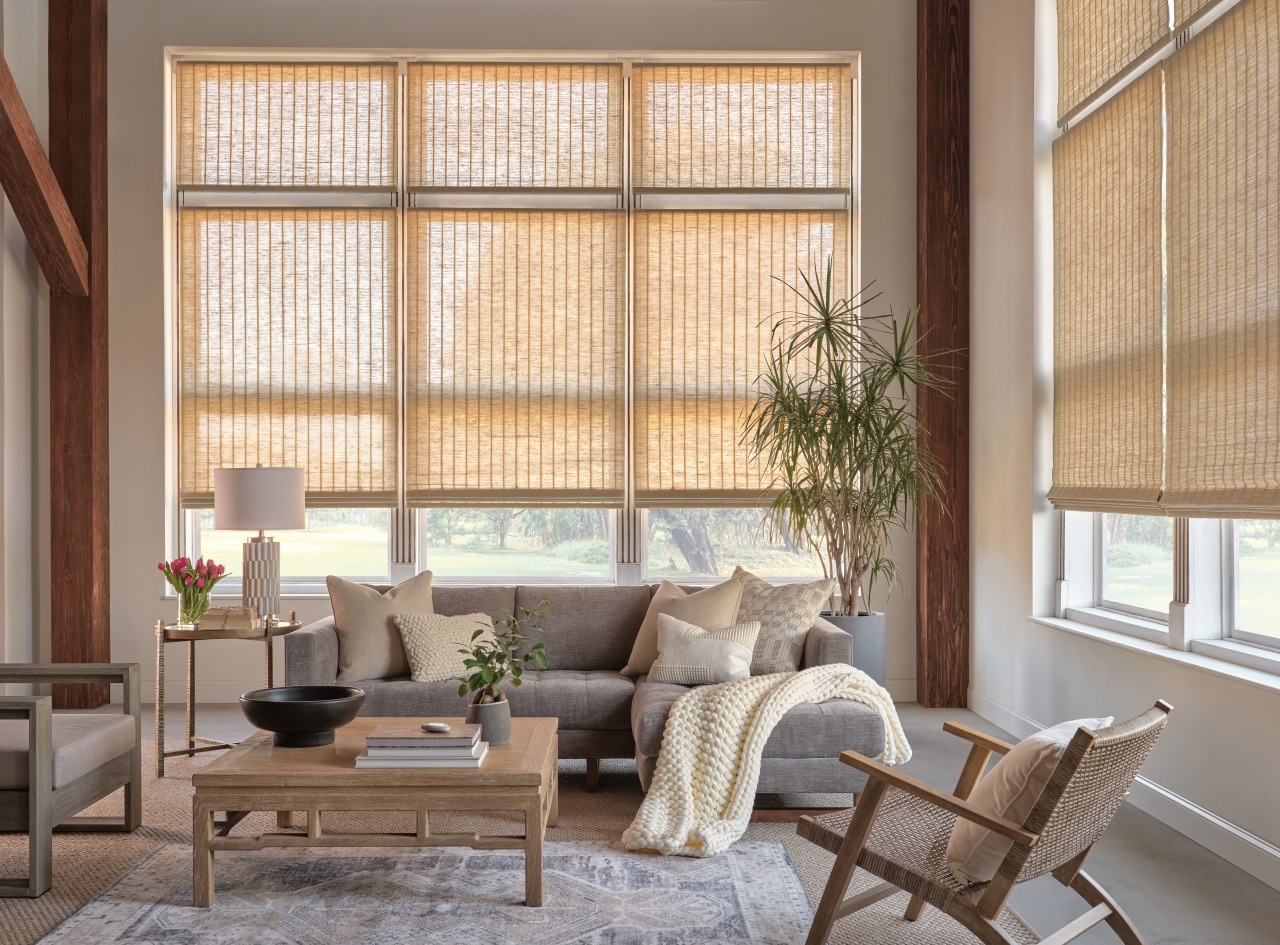
Large windows and sliding doors can bring in beautiful daylight, but they also create practical window-treatment questions. A shade that works well on a standard window may not be the right answer for a wide opening, a moving door, or a group of windows with different operating needs. Hunter Douglas® shades can be considered in several styles, but the selection should begin with the opening, the room, and the way people move through the space.
Start with the shape of the opening
A wide fixed window and a sliding glass door may be next to each other, yet they do not function the same way. The door needs clear access to the handle and track. A fixed window may allow a deeper shade or a different stacking direction. If one treatment covers both openings, the design must account for the moving panel, the stationary glass, and the amount of space available beside the door.
For a wall of windows, consider whether the openings are the same height, whether the frames line up, and whether furniture blocks access. These details help determine whether the treatments should match exactly or coordinate across different product styles.
Match the shade to the way the room is used
A family room may need softer daylight during the day and more privacy at night. A dining area may need glare control without losing its connection to the outdoors. A bedroom with a large glass door may need a darker room, while a home office may need a shade that reduces screen reflections.
Light control is often a matter of degree. Sheer, translucent, light-filtering, and room-darkening options create different experiences, and the exact result depends on the fabric, opacity, window, and installation. If you want a room to feel darker, ask about edge light and mounting conditions instead of assuming that one label tells the whole story.
Consider operation and access
Large shades can be harder to operate by hand, especially when the headrail is high or several shades sit side by side. A cordless or automated configuration may be worth discussing when access is limited. Some products support PowerView® Automation, but availability depends on the product, size, operating system, and configuration.
Sliding doors also require a clear path. A treatment that stacks to one side may preserve more access than one that covers the full opening. Another option may use panels or a shade style intended for wide expanses of glass. The right answer depends on the door's movement, nearby furniture, and how often the opening is used.
Measurement matters more with large glass
Small measurement errors become more noticeable across a wide opening. The installer needs to review the width, height, depth, trim, handles, adjacent walls, and any clearance required for the shade to move. A large window may also need a conversation about how sections are divided, how they align visually, and where control components will sit.
An in-home consultation allows the designer to see the opening in context. Bring up concerns about glare, privacy, pet access, traffic through the room, and whether the door needs to remain usable throughout the day.
Browse the Hunter Douglas® window treatments and the broader shades collection before your appointment. These pages can help you identify styles to discuss, but the final recommendation should be tied to the exact window and product configuration.
Create a coordinated look without forcing one solution
Large glass does not require every opening to use the same operating method. A fixed window might use one shade, a sliding door might use another, and the materials can still coordinate through color and texture. What matters is that the set works as a room, provides the desired light and privacy control, and remains practical to use.
Frequently asked questions
What is the best shade for a sliding glass door?
There is no single best style for every door. Consider the opening direction, clearance, traffic, light needs, and whether the treatment must move with the door.
Can large window shades be motorized?
Some Hunter Douglas® products and configurations offer automated operation. Confirm product, size, power, and control compatibility before ordering.
Will a room-darkening shade eliminate all light around a large window?
Not necessarily. Light can enter at the edges and through installation gaps. Discuss mounting and room-darkening expectations during measurement.
Next step
For a tailored plan for large windows or sliding doors, request an in-home consultation with Blinds by Valeri. Bring photos or measurements if you have them, and the team can review the opening in person.
Request Your Consultation